Discover
Islam!
The eternal and universal religion
of more than one billion people from every race and nationality.
ISLAM
at a
GLANCE
U.K.I.M. DAWAH CENTRE
Freepost, 401, Alum Rock Road
Birmingham, 88 3DT (UK)
Tel/Fax: 0121-326 9936
MUSLIMS’
BELIEF IN A NUTSHELL
“Say: We believe in Allah (God
Almighty) and that which was revealed to Abraham and Ishmael and Isaac
and Jacob and the tribes and that which was given to Moses
and Jesus and to the Prophets from their Lord; we make no distinction between
any of them, and to Him (God) we submit.” (Holy Qur’an 3:83)
ISLAM AND
MUSLIM
Islam is an Arabic word which means
peace, purity, acceptance and commitment. The religion of Islam is the
complete acceptance of the teachings and the guidance of God, (i.e. surrender
to the Will of Allah).
A Muslim is one who accepts freely
and willingly the supreme power of Allah and strives for total re-organisation
of his life according to the revealed teachings of God. He also works towards
the establishment of a just social order which would totally reflect the
guidance of God.
CONTINUITY
OF MESSAGE
Islam is not a new religion. It is in
essence the same message and guidance which Allah revealed to all His Prophets.
‘Say:
We believe in Allah and that
which was revealed to Abraham and Ishmael and Isaac and Jacob and the tribes
and that which was given to Moses and Jesus and to the Prophets from their
Lord; we make no distinction between any of them, and to Him we submit.’(Holy
Qur’an 3:83)
The message which was revealed to
Muhammad, the last Prophet, is Islam in its comprehensive, complete and
final form.
THE FIVE
PILLARS OF ISLAM
Every action which is done with the
awareness that it fulfils the will of Allah is considered an act of worship
in Islam. Nevertheless, the specific acts of worship, termed the pillars
of Islam, provide the framework of spiritual life.
They are the following:
1. The declaration of faith: ‘I
bear witness that there is none worthy of worship except Allah and that
Muhammad is His servant and messenger; the prophethood of Muhammad
obliges the Muslims to follow his exemplary life in every way.
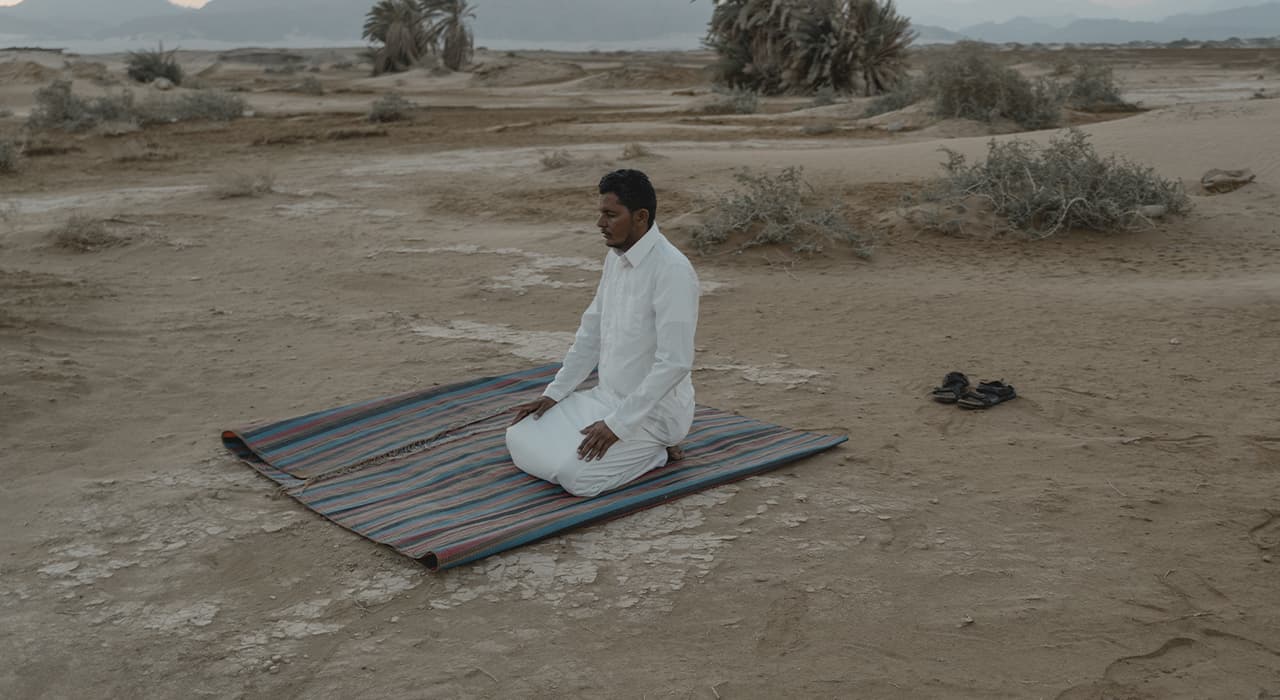
2. Prayers are prescribed five times
a day as a duty towards Allah. They strengthen and enliven the belief in
Allah and inspire man to a higher morality. They purify the heart and control
the temptation towards wrong doing and evil. It should be stressed that
while Allah does not need our prayers we cannot survive without His blessings
and guidance. “0 you who believe! Seek help with patient perseverance
and prayer, for Allah is with those who patiently persevere.” (Holy
Qur'an 2:153)
3. Fasting is observed once each
year during the month of Ramadaan. This means abstention from food, drink
and intimate marital relationship from dawn to sunset. and also from evil
intentions and desires. It teaches love, sincerity and devotion. It develops
a sound social conscience, patience, unselfishness and willpower. When
we fast by choice. Allah remembers our sacrifice.
4. Zakaat - payment annually of 2.5%
of one's net savings as a purifying sum to be spent on the poor and needy.
Zakaat implies that everything man possesses belongs to Allah and therefore
anyone in need has a share in it.
5. Pilgrimage (Hajj) to Makkah -
once in a lifetime provided one has the means to do so. Hajj implies man's
temporary suspension of all worldly activities and his realisation of himself
as a naked soul in front of Allah alone.
ONENESS
OF GOD
Islam enjoins faith in the Oneness and
Sovereignty of God, which makes man aware of the meaningfulness of
the Universe and his place in it. This belief frees him from all fears
and superstitions by making him conscious of the presence of Almighty Allah
and of man's obligations towards Him. Belief in one God requires that we
look upon all humanity as one family irrespective of colour, class, race
or territory, under the Omnipotence of Allah the Creator and Nourisher
of all. Islam rejects the idea of a chosen people, making faith in Allah
and good action the only way to Heaven. Thus a direct relationship is established
with Allah, open to all alike, without any intercessor.
MAN, THE
FREE AGENT
Man is the highest creation of Allah
and chooses his own way. Created with the highest potentialities, man is
left relatively free in his will, action and choice. Allah has shown him
the right path and the life of Prophet Muhammad provides a perfect example.
Man's success and salvation lies in following them. Islam teaches the sanctity
of the human personality and confers equal rights upon all without any
distinction of race or sex.
The law of Allah, enunciated in the
Qur'an’ an and exemplified in the life of the Prophet, is supreme in all
cases. It applies equally to the highest and the lowest, the prince and
the peasant, the ruler and the ruled.
LIFE AFTER
DEATH
The world according to Islam, is a place
of trial and man is being judged in it. Man is accountable to Allah for
all that he does herein. Life on earth will, one day, come to an end: and
after that a new world will be resurrected. It will be in this Life after
Death that man will be rewarded or punished for his deeds and misdeeds.
Allah will judge man on the day of existence which leads to further blessings.
or to Hell, a stage of suffering and punishment.
QUR’AN AND
HADITH
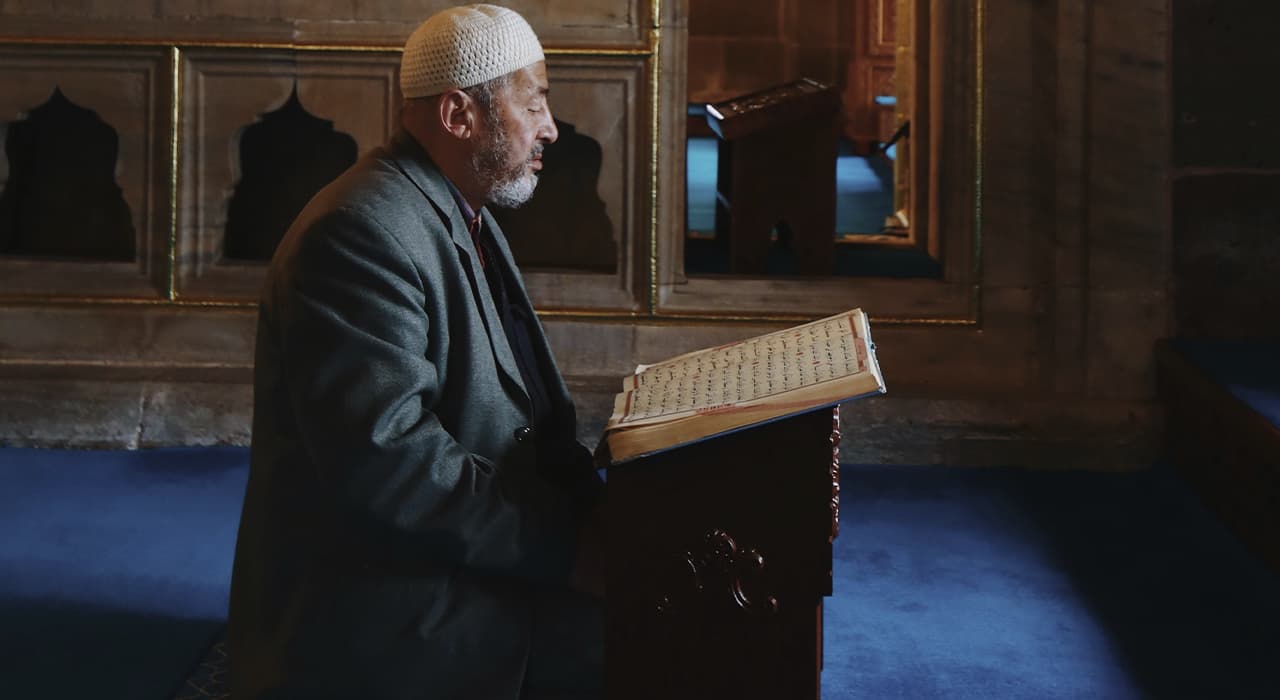
The Qur’an is the last revealed
Word of Allah and as such affirms and completes the total process of revelation
which has come from the Divine Guidance for the human race. The Qur’an
is the basic source of Islamic teachings and laws and deals with the bases
of creed, morality, history of humanity, worship. knowledge, wisdom, the
God-man relation, and human relationship, in all aspects. Comprehensive
teachings on which sound systems of social justice, economics, politics,
legislation, jurisprudence, law and international relations can be built,
are important contents of the Holy Qur’an. Prophet Muhammad himself was
an unlettered man who could not read or write. The Holy Qur’an was revealed
to him piece-meal over a period of 23 years and committed to memory and
writing by his followers under his supervision during his lifetime. The
original and complete text of the Qur’an is available to everybody in Arabic,
the language in which it was revealed. Translations of the meaning into
many languages are widely used.
Hadith, the teachings, sayings and
actions of the Prophet Muhammad, meticulously reported and collected by
his devoted companions, explain and elaborate the Qur'anic verses. |
CONCEPT
OF WORSHIP
Islam does not teach or accept mere
ritualism. It emphasises intention and action. To worship Allah is to know
Him and love Him, to act upon His laws in every aspect of life, to enjoin
goodness and forbid evil and oppression, to practice charity and justice
and to serve Him by serving mankind. Islam seeks to implant in man's heart
the strongest conviction that his every thought and action are known by
Allah, Who sees him at all times and in all places.
The Qur’an presents this concept
in the following sublime manner: “It is not righteousness that you turn
your faces to the East or to the West, but righteous is he who believes
in Allah and the Last Day the Angels and the Books and the Prophets; and
gives his wealth for the love of Him to kinsfolk and to orphans and the
needy and the wayfarer and to those who ask, and to set slaves free; and
observes proper worship and pays the Zakaat. And those who keep their treaty
when they make one, and they are patient in the tribulation and adversity
and time of stress. Such are those who are Godfearing;”
(Holy Qur’an 2:177)
ISLAMIC
WAY OF LIFE
Islam provides definite guidelines for
all people to follow in all walks of life. The guidance it gives is comprehensive
and includes the social, economic, political, moral and spiritual aspects
of life.
The Qur’an reminds man of the purpose
of life on earth, and his duties and obligations towards himself, his kith
and kin, his community. his fellow human beings and his Creator. Man is
given fundamental guidelines about a purposeful life and then he is left
with the challenge of human existence before him so that he might put these
high ideals into practice. In Islam man is a wholesome, integrated unit
and not a collection of fragmented, competitive parts. The sacred and secular
are not separate parts of man; they are united in the nature of human being.
HISTORICAL
PERSPECTIVE
Muhammad (peace and blessings be upon
him) was born in the year 570 A.C. in Makkah, Arabia. He came from a noble
Arab family. He received the first revelation at the age of forty. As soon
as he started preaching Islam, he and his followers were persecuted and
had to face severe hardships. He was therefore commanded to migrate to
Madinah, another city in Arabia. During a short span of 23 years, he completed
his prophethood and died at the age of 63. He was put to rest in the city
of Madinah. He left no wealth or property. He led a perfect life and set
an example for all human beings. His biography illustrates in real life.
the meaning and implications of the Qur’anic teachings.
ISLAM’S
RATIONAL APPEAL
Islam is a simple, rational and practical
religion. The unity of God, the Prophethood of Muhammad and the concept
of life after death are the basic articles of faith. There is no hierarchy
of priests and there are no complicated rites and rituals. Everybody may
approach the Quran directly and translate its dictates into practice.
Islam stands for the middle path
and the goal of producing a moral man in the service of a just society.
"Our Lord! Give us good in this world and good in the Hereafter"
(Holy Qur’an 2:201)
Islam guides towards a better and
complete life glorifying in all Its phases Allah, the Almighty Creator.
STATUS OF
WOMEN
No discrimination is made on the basis
of sex. Islam recognises that the sphere of potential capabilities and
hence responsibilities of men and women are equally important in themselves
but not exactly the same. The roles of men and women are complementary
to each other.
MARRIAGE
AND DIVORCE
Marriage is a very important and sacred
bond of relationship between man and woman and a step towards a better,
purer and happier life. Islam gives both man and woman full right to divorce.
Nevertheless divorce is discouraged and is allowed as the last resort.
Islam allows limited polygamy only as a remedy subject to certain conditions.
JIHAD
Jihad consists in exerting oneself to
the utmost in order to personally follow the teachings of Islam. A Muslim,
therefore expends all the powers of body and soul, his wealth, possessions
and even life in the fight against the evil forces of the world in order
that injustice, oppression and contumacy are annihilated and Allah's just
order is established. Therefore to struggle in the path of Allah with the
pen; speech or the sword is Jihad.
“What has happened to you? Why
don't you fight in the way of Allah in support of men, women and children,
whom finding helpless. they have repressed; and who pray, ‘0 Allah! liberate
us from this habitation which is ruled by tyrants.”
(Holy Qur’an 4:75)
Islam has come to liberate man from
the worship of man and establish the worship of Allah.
ISLAM -
THE SOLUTION FOR MODERN PROBLEMS
THE BROTHERHOOD
OF MAN
A major problem which modern man faces
is that of racism. The materially advanced nations can send man to the
moon but they cannot stop man from hating and fighting his fellow man.
Islam, over the last 1400 years, has shown in practice how racism can be
ended. Every year During the Hajj, the Islamic miracle of the real brotherhood
of all races and nations can be seen in action.
THE FAMILY
The family which is the basic unit of
civilisation is disintegrating in all western countries. Islam's family
system brings into a fine equilibrium the rights of man, wife, children
and relatives. Islam nourishes human unselfishness, generosity and love
in a well organised family system.
Human beings live according to their
view of life. The tragedy of secular societies is that they fail to connect
the different aspects of life. The secular and the religious, the scientific
and the spiritual seem to be in conflict. Islam puts an end to this conflict
and brings harmony to man's vision of life.
CONCLUSION
What is the state of the world today?
Has man freed himself from all superstitions, imbecilities and absurd beliefs?
Has he discovered the man from within himself? Has he liberated himself
from the yoke of worldly tyrants indulging in the exploitation of man by
man? If such a millennium has not been achieved despite all the developments
in science and technology, then Islam has still a great and glorious part
to play. |